PRE-LOVED ★ RELOVED ★ REPEAT ★ SELL YOUR WARDROBE ★ FIND YOUR NEXT FAVOURITE ★ PRE-LOVED ★ RELOVED ★ REPEAT ★ SELL YOUR WARDROBE ★ FIND YOUR NEXT FAVOURITE ★ PRE-LOVED ★ RELOVED ★ REPEAT ★ SELL YOUR WARDROBE ★ FIND YOUR NEXT FAVOURITE ★ PRE-LOVED ★ RELOVED ★ REPEAT ★ SELL YOUR WARDROBE ★ FIND YOUR NEXT FAVOURITE ★ PRE-LOVED ★ RELOVED ★ REPEAT ★ SELL YOUR WARDROBE ★ FIND YOUR NEXT FAVOURITE ★ PRE-LOVED ★ RELOVED ★ REPEAT ★ SELL YOUR WARDROBE ★ FIND YOUR NEXT FAVOURITE ★
You’ve cleared out your wardrobe, rediscovered a few things you’d forgotten you owned, and decided it’s finally time to give them a new home.
Then comes the tricky bit. How much should you actually charge?
That gorgeous dress you paid £120 for? The Zara blazer that’s barely been worn? The boots that seemed like such a good idea but have never made it out of the box?
Price everything too high and you risk taking it all home again. Price everything too low and you might wonder why you bothered.
The good news? Pricing pre-loved fashion doesn’t have to be complicated. A little research, some realistic expectations and a sensible system can make the whole experience much more enjoyable.
1. Forget What You Paid. Think About What It’s Worth Now.
It’s natural to remember the original price of something, particularly if it was expensive.
But here’s the thing: what you paid and what somebody else is prepared to pay are two different numbers.
A £150 dress might sell for £40. A £35 jacket that happens to be particularly desirable could attract almost as much as its original retail price.
What matters is:
- Brand: Recognisable labels can help buyers understand the quality and value.
- Condition: New with tags, barely worn or showing signs of use?
- Style: Is it something people are actively looking for?
- Season: A beautiful winter coat is generally easier to sell when temperatures start dropping.
- Original quality: Fabric, construction and overall finish can matter just as much as the label.
Don’t assume that high-street clothes have no resale value, either. Well-chosen pieces from Zara, Mango, COS, Whistles and similar brands can be wonderful pre-loved finds.
The secret is knowing what you’ve got and presenting it well.
2. Do a Little Research Before Making Your Price Tags
You don’t need to spend hours researching every item, but it’s worth checking anything you’re unsure about.
Start by looking at comparable clothes on Vinted, eBay and other resale platforms.
Search using the brand, style, size and condition. If you’re selling a particular coat or pair of boots, try to find something as similar as possible.
One important distinction: an advertised price isn’t necessarily a selling price.
Someone might have listed a jacket for £65, but that doesn’t mean anyone will actually pay £65 for it.
Where possible, look at completed sales rather than simply browsing active listings.
You can also compare with local pre-loved events, vintage shops and curated second-hand sellers.
Remember that people shopping at an event can see, touch and try on clothes, without having to arrange postage or wait for a parcel.
That’s part of the appeal of shopping in person.
3. Use a Simple Pricing Guide
Rather than making a decision from scratch for every item, start with a rough pricing framework.
Here’s an illustrative example of what different pieces might be priced at for a quality pre-loved clothing event.
| Item | Example resale price |
|---|---|
| High-street top or blouse | £5–£12 |
| Zara or Mango dress | £12–£25 |
| Quality knitwear | £15–£35 |
| Smart blazer | £18–£40 |
| Premium denim | £20–£45 |
| Excellent-condition leather boots | £30–£65 |
| Occasion dress | £25–£70 |
| Designer handbag | Research individually |
These are starting points, not guaranteed selling prices. Actual value depends on the label, original retail price, condition, style and demand.
Something special may deserve a much higher price. Equally, a piece that’s been well loved might need to be priced more modestly.
The aim is to find a price that feels fair to both you and the buyer.
4. Be Realistic About Condition
Condition makes a huge difference to how people perceive value.
Before deciding on a price, take a proper look at each item.
New with tags: These pieces can often command stronger prices, particularly if they’re current styles or desirable brands.
Excellent condition: Worn once or twice, carefully looked after and showing little or no visible wear.
Good condition: Still lovely and wearable, but perhaps with minor signs of use.
Visible wear or damage: Be upfront about any flaws and adjust your price accordingly.
At Repeat Chic, we’re aiming to create an enjoyable shopping experience built around carefully selected pre-loved fashion.
That means clean, presentable clothing in good condition. A missing button, stain or damaged zip shouldn’t come as a surprise to somebody after they’ve bought something.
And don’t underestimate the value of preparation. A freshly steamed dress on a good hanger can look considerably more appealing than the same dress pulled from a bag.
5. Decide Whether You’re Happy to Negotiate
One of the joys of a real-life resale event is being able to have a conversation.
Someone might love a jacket but wonder whether you’d accept a little less. Another shopper might want three things from your stall.
A bit of friendly negotiation can be part of the fun.
Before the event, decide on three things:
- Your ideal selling price.
- The lowest price you’d happily accept.
- Any pieces you’re not prepared to discount.
For example, you might price a dress at £25, knowing you’d be happy to accept £20.
That gives you some flexibility without having to make a rushed decision in front of a customer.
And remember, you’re always allowed to say no politely.
You don’t need to discount something simply because somebody asks.
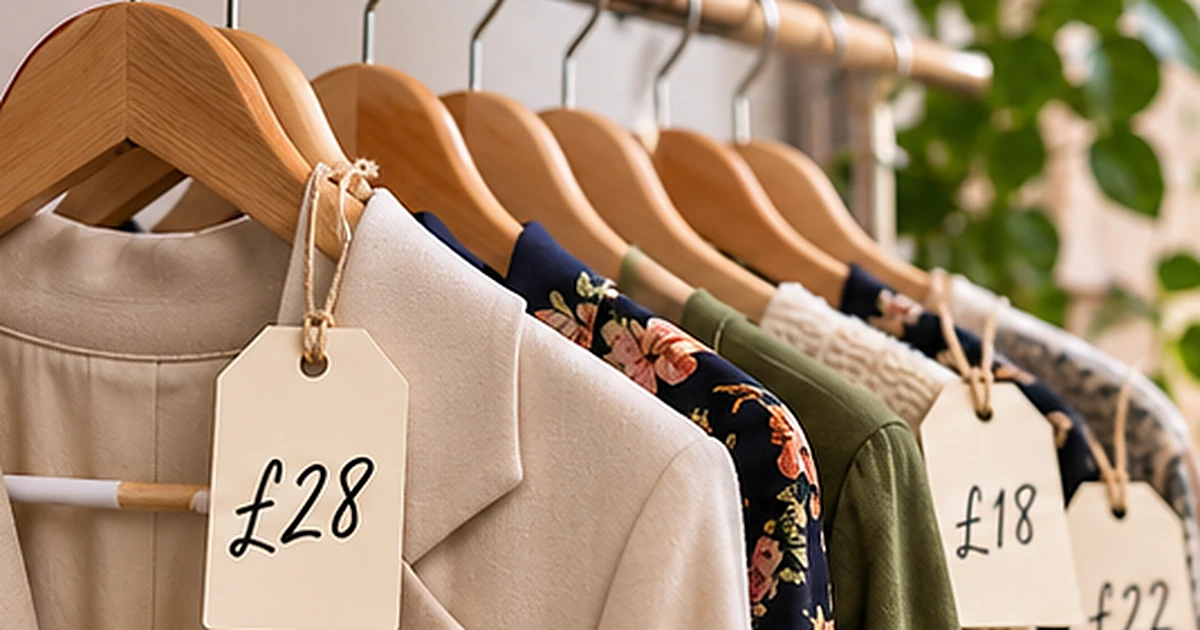
6. Make Your Prices Easy to See
Nobody particularly enjoys picking up an item and having to ask how much it costs.
Clear pricing makes browsing more comfortable for everyone.
For a pre-loved clothing stall, you could use:
- Individual swing tags attached to garments.
- Small labels showing the price and size.
- Attractive signs for groups of similarly priced items.
- A discreet price list for more valuable pieces.
Keep the presentation consistent and easy to read.
For example, you might have a section of blouses at £10 each, a rail of individually priced dresses and a separate area for premium pieces.
Just make sure customers can easily see which prices apply to which items.
There’s no need to turn your stall into a complicated retail operation. A simple, organised setup works beautifully.
7. Think About Bundles, But Don’t Undervalue Your Stock
Bundle offers can encourage someone to buy more than one piece.
Perhaps you’ve got several lovely tops at £12 each and decide to offer two for £20.
Or someone falls in love with a dress and matching jacket, and you’re happy to offer a small discount for buying both.
That’s perfectly reasonable.
What you want to avoid is automatically reducing the price of everything just to make a sale.
Remember, your time, preparation and the quality of your clothing all have value.
A premium pre-loved event isn’t about shifting the biggest possible pile of clothes for the smallest possible amount of money.
It’s about helping great pieces find people who’ll enjoy wearing them again.
8. Work Out What You’d Like to Make
If you’re paying for a stall, it helps to have an idea of how many sales you’d need to cover the cost and reach your goal.
Let’s imagine your stall costs £35.
You bring 40 carefully selected pieces with an average selling price of £15.
If you sell:
| Number of items | Sales total |
|---|---|
| 5 items | £75 |
| 10 items | £150 |
| 15 items | £225 |
| 20 items | £300 |
Those figures are examples, not sales predictions. Your actual takings will depend on what you bring, what shoppers want and the prices you achieve.
You’ll also need to account for your stall fee, any payment processing charges and other expenses. If you’ve bought clothing specifically to resell, the cost of that stock matters too.
But working through a few scenarios beforehand can give you confidence and help you set a realistic target.
9. Don’t Panic If Everything Doesn’t Sell
Not selling every single item doesn’t mean your prices were wrong.
Perhaps the right buyer simply wasn’t there. Maybe the weather was unexpectedly warm and nobody was thinking about winter coats.
There are plenty of reasons why lovely clothes don’t sell on a particular day.
As the event progresses, you can decide whether to offer a few reductions, encourage bundle purchases or keep your prices as they are.
Afterwards, make a note of what sold well and what attracted interest.
You’ll soon start spotting patterns that make your next event easier to prepare for.
10. Remember Why People Love Shopping Pre-Loved
People don’t only buy second-hand clothes because they’re cheaper.
They love discovering something different, finding quality pieces they might not otherwise afford, and giving clothes another chance to be worn and enjoyed.
There is also something lovely about meeting the person who owned a piece before you.
You might discover that the dress you’re buying was worn to a wedding, or that the jacket you’ve fallen in love with has travelled halfway around the world.
That’s part of what makes in-person pre-loved shopping special.
And it’s exactly the sort of atmosphere we want to create at Repeat Chic.
Ready to Give Your Wardrobe Another Life?
Pricing is only one part of preparing for a resale event. Getting your clothes organised, choosing a good display and making it easy for people to pay will all help make the experience more enjoyable.
Explore our Seller Setup resources for more practical advice, or visit Sell With Us to find out more about the Repeat Chic experience.
Great clothes deserve more than a lifetime at the back of the wardrobe.
Pre-loved. Reloved. Repeat.